

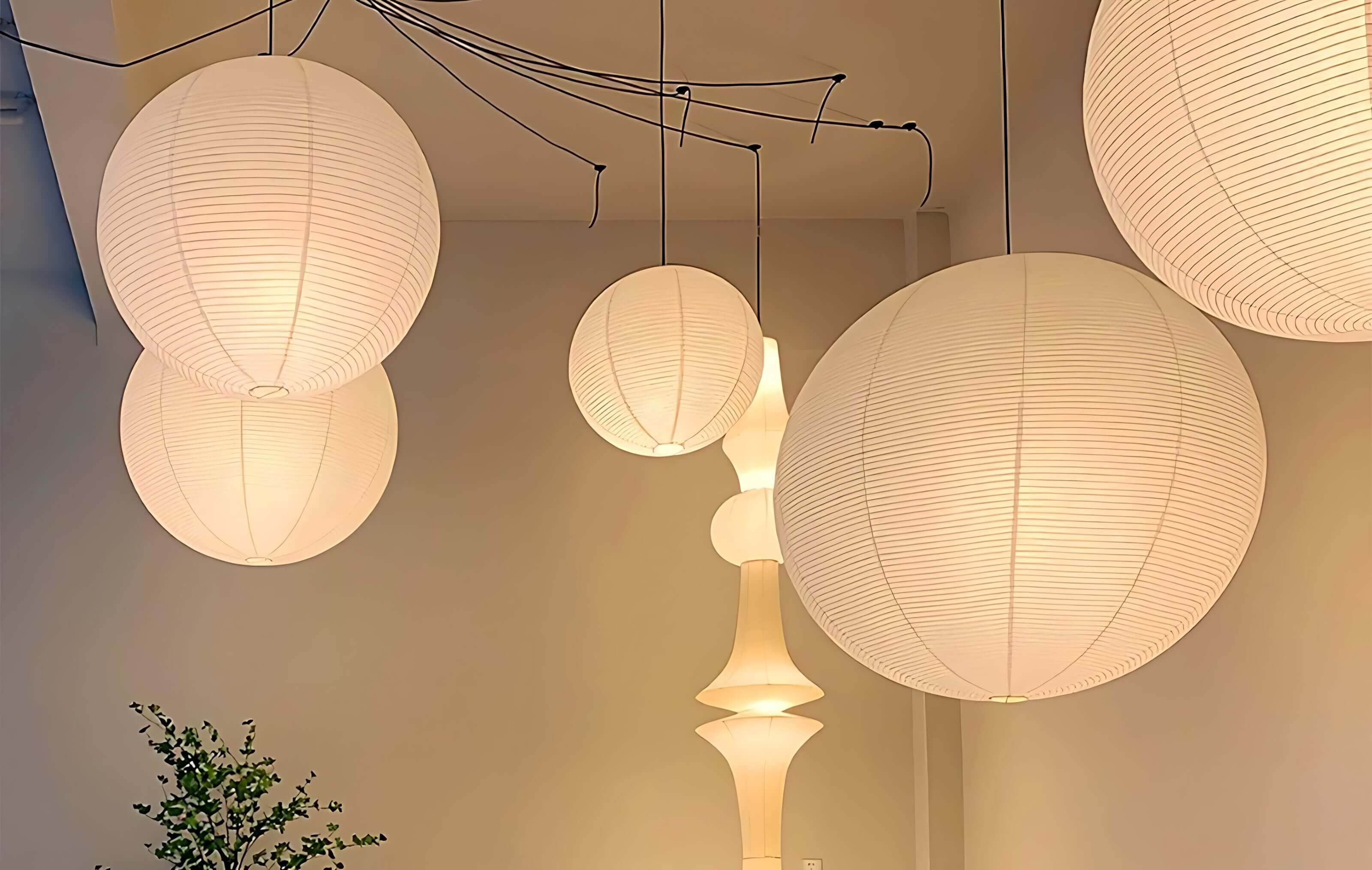
When I look at this lantern chandelier, I see more than a light fixture—I see a process rooted in patience, craftsmanship, and calm. Rice paper lantern chandeliers like this one don’t just appear serene. Every step, from choosing the bamboo frame to stretching the paper, shapes the final glow you see in your home. Let me walk you through how this kind of chandelier comes to life and why it feels so right in modern interiors ✨
1. Choosing the Bamboo Frame 🌿
Everything starts with the frame. For a rice paper lantern chandelier, artisans typically use thin, flexible bamboo because it bends smoothly without cracking. I always pay attention to the spacing of the ribs. Even spacing creates a balanced, round silhouette, which helps the lantern feel light and intentional instead of lumpy or uneven.

Bamboo also brings quiet strength. It holds the shape over time while staying visually soft, which matters when the goal is calm, not drama.
2. Shaping the Lantern Form 🟠
Once the bamboo ribs are in place, the frame gets shaped into a sphere or oval. This step defines how the light will spread later. I love round lanterns like this one because they distribute light evenly in all directions. No harsh shadows. No bright hotspots. Just glow.

At this stage, the chandelier already feels architectural, even without paper.
3. Selecting and Preparing the Rice Paper 📄
High-quality rice paper—or traditional washi—makes all the difference. I look for paper with visible fibers and a slightly warm tone. That texture softens the light naturally. Smooth, overly white paper often looks flat once illuminated.

Artisans cut the paper carefully to match the lantern’s curves. Precision here prevents wrinkles and sagging later.
4. Applying the Paper by Hand 🤍
This part requires patience. The paper wraps gently around the bamboo frame, usually glued or adhered section by section. Each horizontal line you see comes from careful alignment, not machines rushing the process.

I always admire this step because it’s where the lantern starts to feel alive. The paper turns the structure into something emotional, not just functional.
5. Installing the Light Source 💡
The bulb choice matters as much as the materials. I always recommend a warm white bulb (2700K–3000K). Cooler light kills the softness instantly. Warm light brings out the paper’s texture and gives the lantern that candle-like glow everyone loves.

Many lantern chandeliers hide the socket neatly inside so the focus stays on the form and the light—not the hardware.
6. Final Inspection and Finishing Touches ✔️
Before completion, artisans check tension, symmetry, and balance. A well-made lantern hangs straight and keeps its shape without pulling or collapsing. When I see a lantern like this floating cleanly from the ceiling, I know the details received proper attention.

Why are rice paper lanterns so highly regarded by designers? 🧘
Xuan paper pendant lamp doesn’t shout. It softens the room the moment it turns on. The rice paper diffuses light evenly, the bamboo frame adds warmth, and the round shape relaxes the eye. I often recommend this style for living rooms, bedrooms, dining spaces, and entryways where people want to breathe a little slower.

🎁 Conclusion: A Warm Holiday Gift
In this fast-paced era, rossolighting persists in this slow and meticulous craftsmanship because we believe that true design is worth waiting for.
With Christmas and New Year approaching, we want to not only brighten your home but also warm your heart. We have prepared the warmest gift for you this year: use discount code 2025 to enjoy a 10% discount on your first purchase.
Share:
✨Designer Tips: What Is Alabaster Lighting and Why It Never Goes Out of Style
✨Designer Tips: What Is Alabaster Lighting and Why It Never Goes Out of Style