

Glass Pendant Lighting Guide
How Glass Pendant Lights Add Warmth, Texture, and Character
A practical look at how transparency, texture, bulb color, and placement can make glass lighting feel warmer and more personal.
- Warmth
- Texture
- Glass Finish
- Color Temperature
Glass pendant lights can brighten a room without making it feel cold. I often use them when an interior needs a focal point that still lets furniture, art, and architecture breathe.
Glass Guide 01
Why Glass Makes Pendant Lighting Feel Light and Refined
 Explore Court Crystal Pendant Lamp
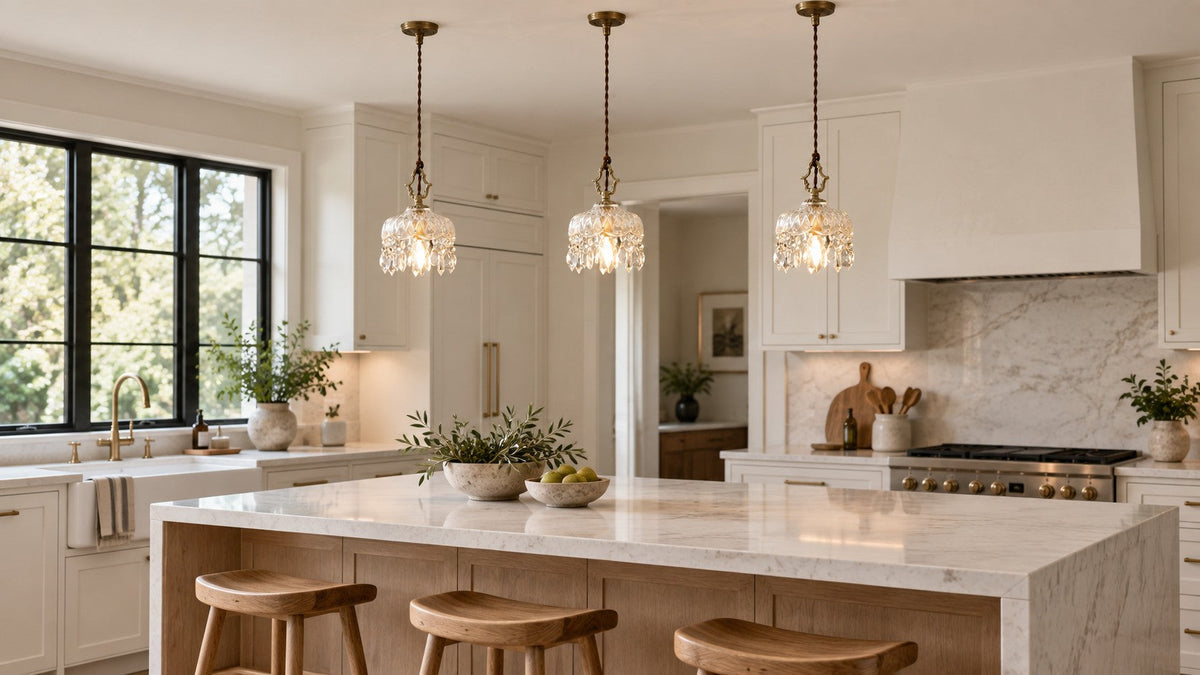
 Glass usually carries less visual weight than an opaque shade because it preserves sightlines. That quality helps above a kitchen island, a compact dining table, or in an entry where a bulky fixture could crowd the view. Clear glass feels especially airy, while tinted or textured glass adds presence without creating a heavy block overhead.
I always judge a pendant from several angles: the doorway, a seated position, and the busiest path through the room. Before buying, outline its proposed width with painter’s tape or hold up a paper template. This simple test gives a more honest sense of scale than a tightly cropped product photo.
Glass Guide 02
How Glass Softens Light and Creates a Warmer Atmosphere
 Explore Crystal Haba Pendant Lamp
 Not every glass shade softens light in the same way. Clear glass lets the bulb shine directly, creating sparkle but sometimes glare. Frosted glass spreads light more evenly, while ribbed or patterned glass breaks the beam into gentle highlights and shadows. For dining rooms and bedrooms, I favor more diffusion when people will see the fixture at eye level.
Treat the bulb as part of the design. A bright exposed bulb can overpower delicate glass, especially after sunset. Choose lumens for the activity, add a compatible dimmer, and test the light at night. Let table lamps, wall sconces, or ceiling lights share the practical work so the pendant can build atmosphere without leaving dark spots.
Glass Guide 03
Using Texture to Add Depth Without Making a Room Feel Heavy
 Explore Court Crystal Pendant Lamp
 Ribbed, seeded, faceted, and subtly irregular glass can give a neutral room extra depth. These surfaces catch daylight and scatter evening light, adding movement without another strong color. I recommend choosing one dominant texture and repeating its rhythm instead of matching it exactly. Ribbed glass might echo fluted cabinetry or pleated fabric, while faceted glass can connect with geometric art.
Keep nearby materials calmer so the pendant feels intentional rather than busy. Consider upkeep as well. Detailed glass makes dust and kitchen film easier to notice in strong light. Check that you can reach the shade opening and clean it safely. Near food-prep areas, a simpler washable surface often makes more sense.
Glass Guide 04
Clear, Frosted, Ribbed, and Colored Glass: What Changes?
 Explore Crystal Haba Pendant Lamp
 Clear glass creates the most open look and puts the bulb on display. It works well when sightlines matter, but it requires careful glare control and regular cleaning. Frosted glass conceals the bulb, softens hard brightness, and produces a calmer glow—useful in bedrooms, breakfast nooks, and relaxed dining spaces.
Ribbed glass falls between the two. It keeps some transparency while blurring the bulb and creating lively reflections. I like it in rooms that need texture but already contain bold color or pattern. Colored glass acts as an accent: warm tints can deepen an earthy palette, while cooler hues can sharpen a contemporary one. View any colored shade in daylight and after dark because it may cast color onto nearby walls, counters, or ceilings.
Glass Guide 05
How Bulb Color Temperature Affects the Look of Glass
 Explore Court Crystal Pendant Lamp
 Bulb color can change the character of glass as much as the shade itself. In living rooms, dining rooms, and bedrooms, 2700K usually creates a cozy glow. A 3000K bulb looks crisper while staying comfortable, so it often suits kitchens and open-plan spaces. Cooler light can support detailed tasks, but it may make decorative glass feel less intimate.
I look for a color rendering index of 90 or higher when food, fabric, and paint colors need to look accurate. Keep visible fixtures in the same general color-temperature family; a warm pendant beside a cool recessed light can make a room feel disconnected. With clear glass, bulb shape becomes part of the decor. Confirm bulb and dimmer compatibility before installation to prevent flicker or a poor dimming range.
Glass Guide 06
Creating a Balanced and Inviting Interior with Glass Lighting
 Explore Crystal Haba Pendant Lampg
 Start with the room rather than the fixture. Note furniture width, ceiling height, traffic paths, existing finishes, and where people will sit or stand. Above a table or island, keep the arrangement visually contained within the furniture below. As a starting point, place the bottom of the pendant about 30 to 36 inches above the surface, then adjust for sightlines and the people using the space.
A pendant does not need to match every finish or curve. I prefer one clear connection: repeat a nearby metal, echo a rounded furniture edge, or use an angular form as deliberate contrast. For a row of pendants, keep spacing and hanging height consistent unless you plan an intentional cluster.
For a mood board, I might save the Court Crystal Pendant Lamp and Crystal Haba Pendant Lamp as visual references, then compare the images with paint, furniture, and material samples. This keeps the choice focused on the entire interior instead of one isolated product image.
Share:
Which is better for entryway lighting: wall sconces or pendant lights?