

Glass vs. Alabaster Lighting:Which Material Fits Your Home?
A practical look at light, texture, and everyday living—through six buying mistakes to avoid.
 Explore the fixture
A glass pendant can catch the afternoon sun beautifully. An alabaster shade can make a quiet corner feel warm after dark. When I compare glass vs alabaster lighting, I start with the room and the kind of light I need there. Before Black Friday shopping pulls you toward a pretty fixture, consider these six buying mistakes. They can help you choose something you’ll enjoy long after the holiday decorations come down.
Glass vs Alabaster Lighting: What’s the Difference?
The first mistake is treating all glass shades alike. Clear glass lets you see through the fixture and often exposes the bulb. Opal glass scatters light across a milky surface, while colored and smoked glass change the fixture’s appearance and how much light passes through it. I look closely at both daytime and nighttime photos before choosing a finish.
Natural alabaster brings its own pattern of veins and cloudy tones. Light passes through the stone and reveals those variations, so two shades can have different markings. I like that individual character beside simple furniture. Check the material description carefully, especially if you want natural stone, since an alabaster-look shade may use another material.
 Explore the fixture
Compare Light Quality, Brightness, and Glare
A softly glowing shade can still leave a tabletop too dim for homework. I check lumen output when the listing provides it, then look at the shade opening and bulb position. Clear glass can leave a bright bulb in your line of sight. Opal glass and translucent alabaster can soften the visible light source, while an open bottom may send more light toward the surface below.
I prefer warm light around 2700K to 3000K for relaxed evenings. For dinner-table dimming, check the whole setup. The smoked-glass Rovixa Pendant Lamp uses a built-in LED, and its specifications list a fixed, non-dimmable output. If you want adjustable brightness, confirm that the fixture supports it and that the bulb or driver matches your dimmer.
 Explore the fixture
Match the Material to Your Home’s Style and Finishes
I find clear glass helpful when I want to keep a view open across a small room. Smoked glass adds a darker accent, and colored glass can repeat a shade from artwork or upholstery. The Pevlira Pendant Light, for example, brings together petal-shaped glass panels and slender brass borders. I’d choose the pink version for a breakfast nook with a walnut table and cream upholstery, letting the floral shade add a soft touch of color.
Alabaster’s pale surface and natural markings work well with oak, walnut, linen, and warm white walls. I pay attention to the metal finish, too. Brass can echo cabinet pulls, while black can connect a light to window frames or dining chairs. Look at the fixture with the light off, since you’ll see that version through much of the day.
 Explore the fixture
Choose Glass or Alabaster for Each Room
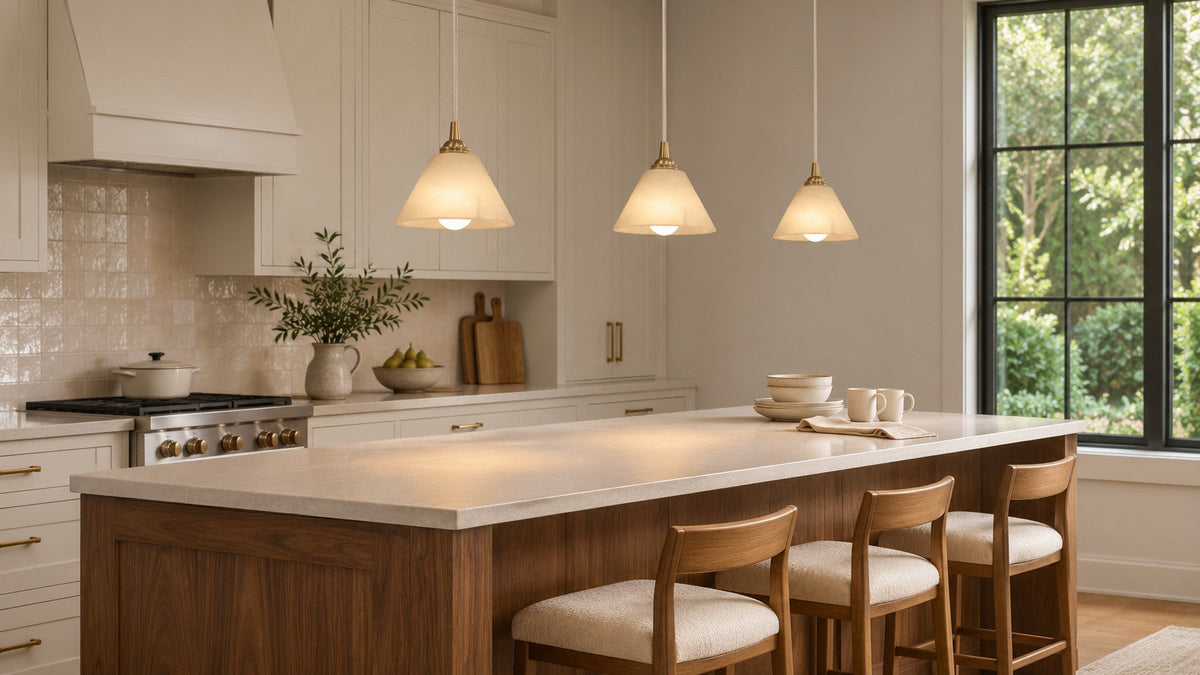
In a kitchen, I plan counter lighting first, then choose pendants to suit the island and surrounding sightlines. Either material can work, but check where the fixture directs its light. Over a dining table, look at the shade from a seated position. In a bedroom, think about how it will look when you lean back against the pillows. Add a separate reading light if you need a focused beam.
Scale matters as much as material. The Terlon Alabaster Pendant Light measures 6.3 inches across and 5.5 inches high. I’d consider that compact shade for a small nook or a planned grouping over a longer surface. Measure the furniture, mark the fixture positions, and check the hanging range before ordering. For bathrooms and outdoor areas, choose a fixture with the rating your installation location requires.
 Explore the fixture
Consider Cleaning, Care, and Installation Requirements
Before I buy, I picture reaching the shade to dust it and change a bulb. A cluster over a staircase needs more planning than a single pendant above a table. Clear surfaces make dust easy to spot, and textured shades have more grooves to reach. Follow the care directions for the exact fixture. Rossolighting specifies a soft, dry cloth for Rovixa and Terlon and advises avoiding harsh cleaners and excess moisture.
For installation, use the listed fixture weight and mounting instructions. Large glass assemblies and stone fixtures can both need substantial support. Have a licensed electrician check the ceiling box and any added support before hanging a hardwired light. Confirm the canopy size, drop length, and sloped-ceiling hardware, too. If you choose several pendants, include the ceiling-box layout in that conversation.
Compare Prices and Decide Where to Spend Your Budget
I compare complete setups. Two pendants mean two fixtures, and the installation may require extra wiring or ceiling work. Add any bulbs, compatible controls, and delivery costs to the budget. Then check the return terms, particularly for custom sizes. Glass and alabaster both cover a wide price range, so compare the actual size, construction, and light source of the options on your shortlist.
For Black Friday shopping, I’d put the largest share of the budget toward a fixture I see and use every day. That might mean an alabaster light over the dining table or colored glass in a breakfast corner. Rossolighting offers 10% off your first order with WELCOME10. Enter the code at checkout and check the discount on your chosen items before paying.
My choice comes down to the view and the evening routine. I lean toward glass when I want transparency, reflection, or color, and toward alabaster when I want natural pattern and a gentle stone glow. Browse the Rossolighting lighting collection with your room measurements nearby. Choose the light that fits the space, then use the first-order offer to make that purchase go further.
Find the material that feels like home
 Explore the fixture
Rovixa Pendant Lamp
Smoked glass · A clean, reflective accent
Explore the fixture

Share:
Pendant Lights vs. Chandeliers: Which Is Better for Your Dining Room?